What if the meal you eat every day could be made more nutritious without changing the food you know and love?
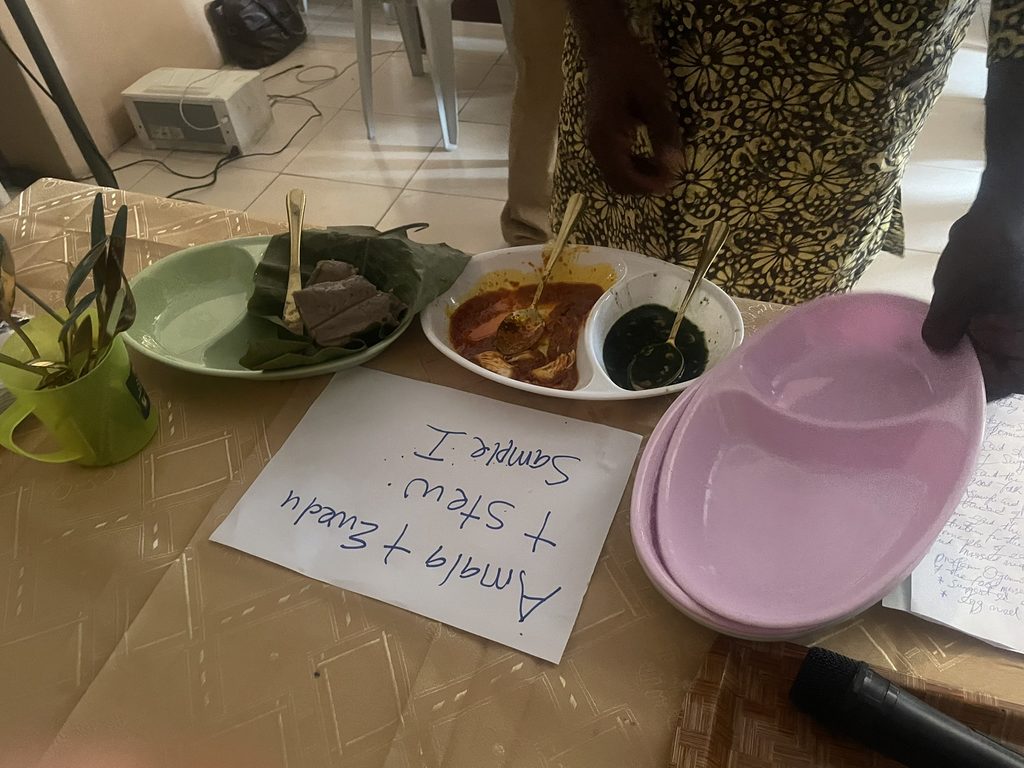
Think about a typical Nigerian meal; Amala and ewedu, Moi-moi, Eba, Fufu, Plantain, Pounded yam, soups and sauces, Egbo, Eko, Akara, Yam porridge, Tuwo, cassava meal, Pap, etc. These foods are more than what we put on our plates. They are part of our culture, our homes and our identity. But there is a question worth asking:
Can we make these familiar foods even better for the body without changing what makes them familiar?
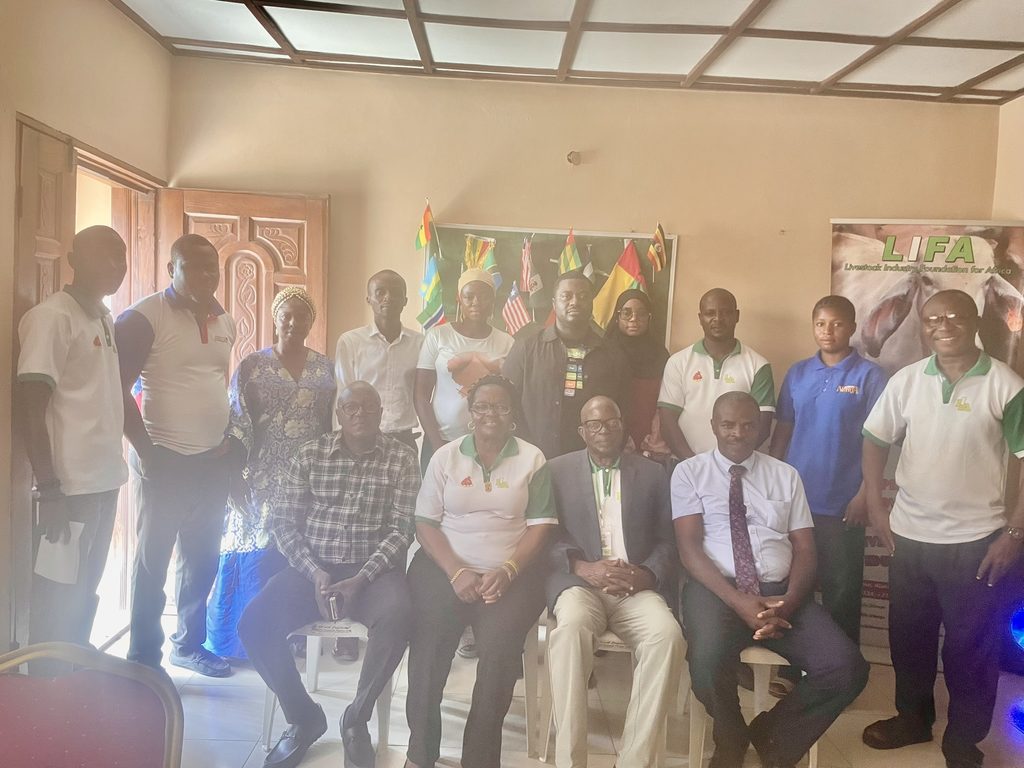
This is the question that has inspired the Fortified Meals Initiative of Livestock Industry Foundation for Africa (LIFA).
An idea born from the food we already eat
Improving nutrition does not always require introducing a completely new food or asking people to abandon traditional diets. Sometimes, the answer may be hidden in the foods we already produce and the meals we already prepare. LIFA is exploring a simple but innovative idea: incorporating egg into familiar Nigerian meals in ways that enhance their nutritional value while allowing people to continue enjoying the foods they know.
And there is something particularly interesting about the approach. The goal is not necessarily for the consumer to see an egg sitting on the plate. Instead, the egg can become part of the meal itself. It can be incorporated into the preparation process so that the finished food retains its familiar character while gaining additional nutritional value.
In other words, the egg may be invisible to the eye, but its nutritional contribution is still there. That is the idea behind LIFA’s approach to fortified meals.
Why the egg?
The egg is one of nature’s nutrient-rich foods and is an important source of high-quality protein, alongside several vitamins and minerals. Yet the way we think about eggs often limits how we use them. We may think of an egg as something to boil, fry or eat alongside a meal. LIFA is asking us to think differently.
What if the egg is not just something we eat with our food, but something we can use to improve the food itself?
This shift in thinking opens up many possibilities. Instead of asking a family to add another item to an already expensive meal, could we incorporate egg into the food they are already preparing? Instead of asking people to change their eating habits completely, could we improve the nutritional quality of familiar meals? Instead of treating nutrition and livestock production as separate conversations, could we connect them? These questions are at the heart of the Fortified Meals Initiative.
From the kitchen to the body
The importance of this idea goes beyond simply adding an ingredient. The body needs a variety of nutrients to support growth, repair, energy, immunity and general wellbeing. However, the nutritional quality of a meal depends on what ingredients make up that meal and how they are prepared. LIFA’s pilot exploration of fortified meals has provided encouraging observations suggesting that incorporating egg into selected local food preparations can improve their nutritional profile and increase the value of the meal to the body. These early findings are important because they point towards a practical approach to nutrition.
Improve the meal people already eat.
Not every nutrition intervention has to begin with a completely new diet. Sometimes, innovation begins by looking at an ordinary meal and asking:
“How can we make this better?”
Could this also matter for people living with diabetes?
This question becomes particularly important when we consider people who need to pay closer attention to what they eat. People living with diabetes often have to think carefully about meal composition, portion sizes, carbohydrate intake and overall dietary quality. The potential role of egg-fortified meals in this context is therefore an area worth exploring. LIFA’s pilot work has generated encouraging observations regarding the possible usefulness of egg-fortified local meals for people managing diabetes. However, it is important to be clear: fortified meals are not a cure or replacement for diabetes treatment. Rather, the initiative is exploring how improving the nutritional composition of familiar meals may contribute to healthier dietary choices as part of appropriate diabetes management.
This distinction matters.
Good nutrition should complement, not replace professional medical care and advice. For LIFA, the opportunity is to continue generating evidence and working with nutrition and health professionals to understand where egg-fortified meals can make the greatest contribution.
There is another story behind the egg
There is something else that makes this initiative particularly interesting. The egg on the plate has a story. Before it reaches a household kitchen, it may have come from a poultry farm where a farmer has invested in birds, feed, labour, housing, veterinary care and other production costs. And that farmer needs a market. Nigeria’s poultry sector can experience periods of egg oversupply, commonly referred to as egg glut. During such periods, farmers may struggle to sell eggs at prices that adequately reflect the cost of production. This creates a challenge that cannot be solved only at the farm. We also need to think about the other end of the food chain:

How can we encourage more people to consume eggs in more ways?
This is where nutrition and agriculture meet.
What if we changed the way we think about egg consumption?
Imagine if egg consumption was not limited to seeing a whole egg on your plate. Imagine eggs becoming an ingredient in the preparation of the foods people eat regularly.
A food vendor could prepare a fortified meal.
A caterer could develop a new recipe.
A household could incorporate egg into a familiar dish.
A community nutrition programme could demonstrate practical egg-fortified recipes.
A poultry farmer could supply eggs into this growing network.
Suddenly, the egg is doing more than feeding one person.
It is moving through a value chain.
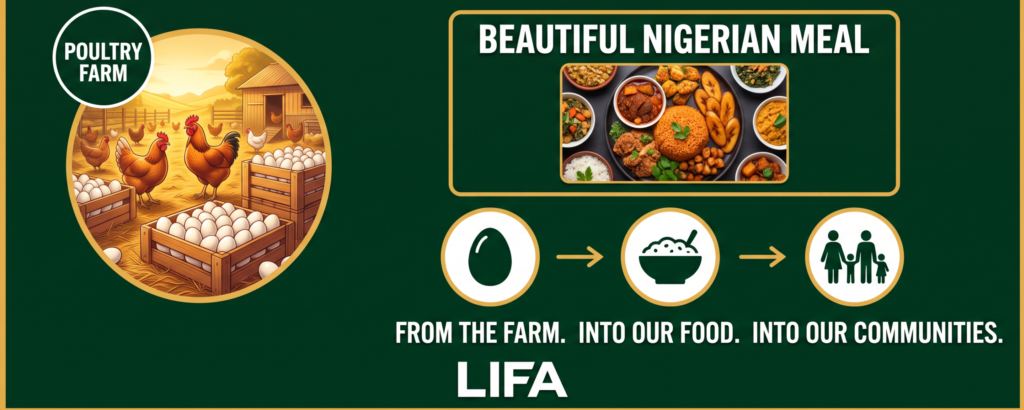
Farmer → Egg → Food preparation → Fortified meal → Consumer → Nutrition → Demand
This is why the Fortified Meals Initiative is not simply about recipes. It is about connecting the farm to the plate.
From egg glut to opportunity
Egg glut is often discussed as though the only question is:
“How do we sell the eggs that farmers have already produced?”
Perhaps we should also ask:
“How do we create more reasons for people to consume eggs?”
Developing new uses for eggs could create additional demand channels. The objective is not to suggest that egg-fortified meals alone can eliminate egg glut. The poultry market is influenced by many factors, including production costs, feed prices, consumer purchasing power, supply and demand. But increasing the number of ways eggs can be incorporated into everyday foods may contribute to a stronger culture of egg consumption and provide an additional market opportunity for poultry producers. That is a conversation worth having.
The egg you don’t see
There is something beautiful about this idea. A child could eat a fortified meal without thinking about the egg that went into its preparation. A family could enjoy a familiar dish without feeling that they have been asked to change their culture. A food vendor could offer a nutritious version of a familiar meal. A poultry farmer could see another potential market for the eggs produced on the farm. The egg may not be visible. But its contribution can still be meaningful.
The egg you don’t see can still be part of the nutrition you receive. Keeping Nigerian food Nigerian
Perhaps one of the most important principles behind LIFA’s approach is that nutrition innovation does not have to mean abandoning local food culture. Nigeria has an extraordinary diversity of foods. Our challenge is not necessarily that we do not have food. The opportunity is to understand how the foods we produce and consume can be prepared in ways that better support health and wellbeing. This is why local recipes are important. When innovation is built around familiar foods, it has the potential to be more culturally acceptable and easier for communities to understand and adopt. LIFA is therefore not trying to replace Nigerian meals.
The ambition is to enhance them. From one meal to a movement
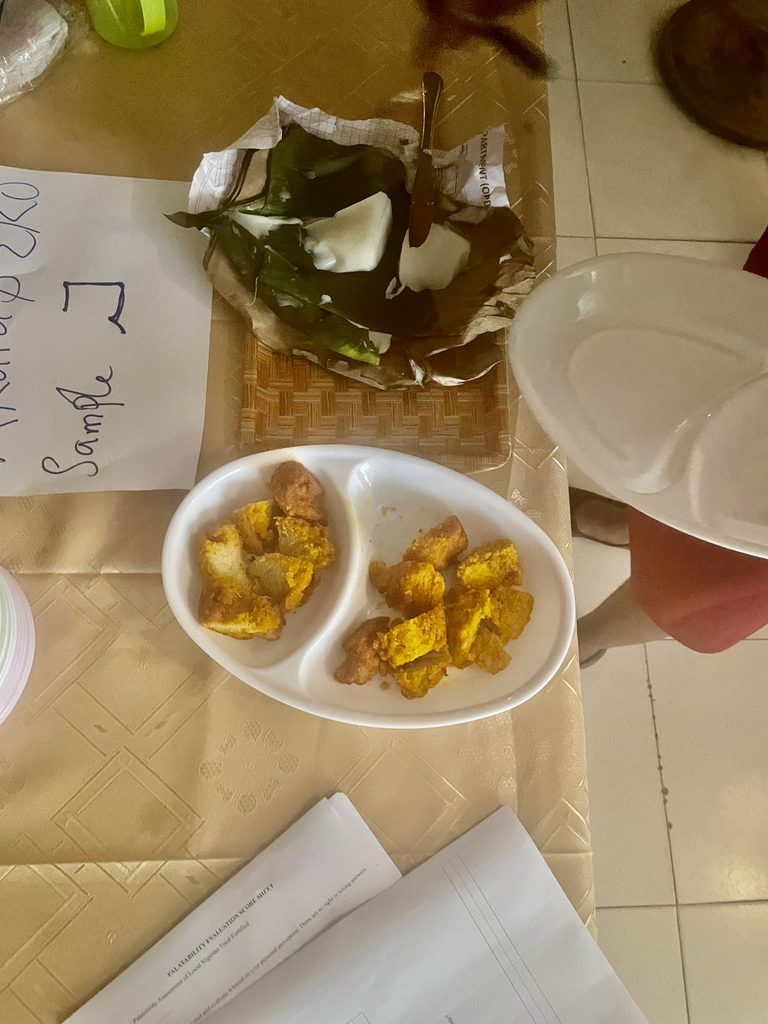
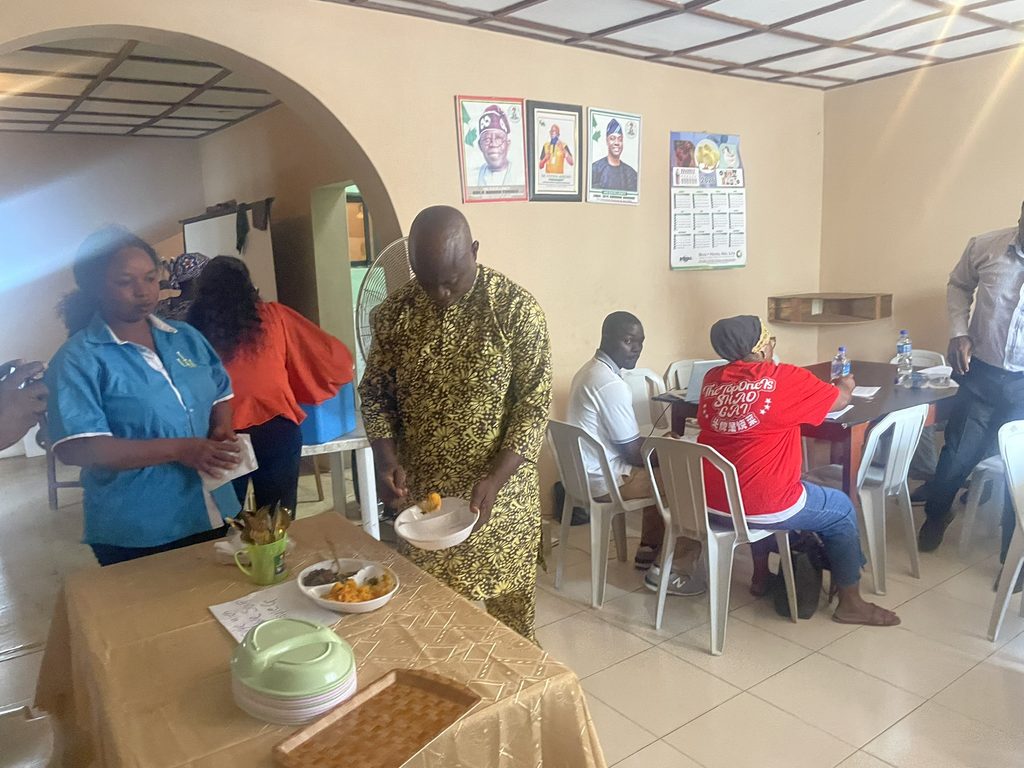
The Fortified Meals Initiative is still a journey. LIFA’s pilot exploration is helping to generate questions, observations and evidence that can guide the next stage of the work. There is much more to learn. Which local meals are most suitable for fortification? How much egg should be incorporated? Does the fortified meal remain affordable? Do consumers like the taste and texture? How much does the nutritional profile improve? Can food vendors adopt the recipes? Can households prepare them easily? Can poultry farmers benefit from the additional demand? And, importantly, what measurable health and nutrition outcomes can be demonstrated over time? These are questions that require research, testing, collaboration and evidence. And that is precisely where innovation begins.
A different way of thinking about food
Perhaps the biggest lesson from the Fortified Meals Initiative is that solutions to complex problems do not always have to be complicated. Sometimes, innovation means looking at something familiar from a different perspective. The poultry farmer sees an egg. The nutritionist sees nutrients. The food vendor sees an ingredient. The household sees a meal. The person living with a chronic condition sees a dietary choice. LIFA sees an opportunity to connect all of these perspectives. An opportunity where agriculture can contribute to nutrition, nutrition can create demand, and local food can become a vehicle for healthier communities.
The vision of LIFA
Livestock Industry Foundation for Africa believes that the livestock sector has a role to play far beyond the production of animals and animal products. Livestock agriculture is connected to food, nutrition, livelihoods, enterprise and community development. The Fortified Meals Initiative reflects this broader vision. It asks us to look at the egg not simply as a product from the poultry farm, but as a potential nutritional bridge between farmers and consumers.
The vision is simple:
Better meals.
Better nutrition.
Better use of locally produced food.
Better opportunities for farmers.
And perhaps, one day, when someone sits down to enjoy a plate of their favourite Nigerian meal, they may not see an egg in it. But they may know that somewhere within that familiar meal is an idea that began on a poultry farm and travelled all the way to their plate.
An egg they may not see.
A nutritional value they may feel.
And an agricultural opportunity that can benefit the farmer who produced it.
This is the idea behind LIFA’s Fortified Meals Initiative.
From the farm.
Into our food.
Into our communities.